Get a quote in
Normanton, QLD 4890
Find and get quotes from businesses in Normanton, QLD 4890.
Get a quote its free!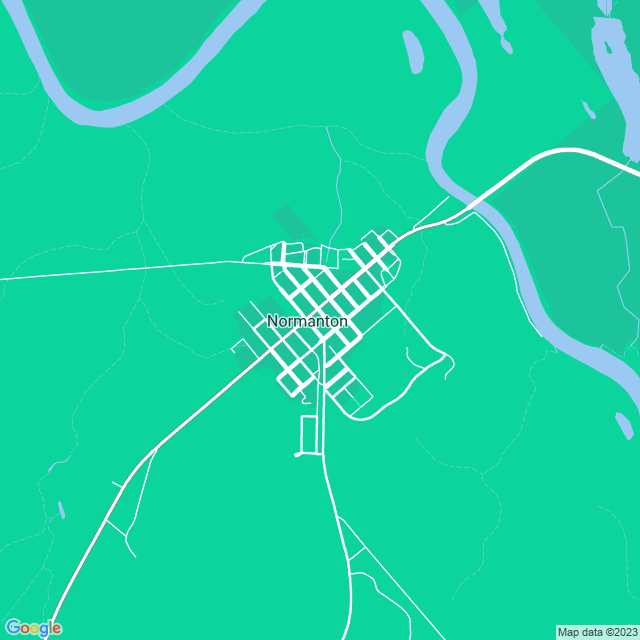
Top businesses in Normanton, QLD 4890

Get connected with the best businesses in your area
We independently verify businesses all around Australia so you can have the confidence that you're getting a good deal when you get a quote through us.
Get a quote its free!What's happening in Normanton, QLD 4890
Anhui Feichun Special Cable Co., Ltd.
11 July 2025Electrical and Physical Parameters of Type 245
Voltage Ratings form the foundation of cable selection for mining applications. Type 245.1 cables operate at 1.1/1.1 kV, where the dual voltage notation indicates both the voltage between any conductor and earth, and the voltage between any two conductors. This voltage level is suitable for many auxiliary systems, lighting circuits, and smaller mobile equipment. Type 245.3 cables operate at 3.3/3.3 kV, with some manufacturers offering variants up to 6.6 kV for higher power applications. The higher voltage capability allows for more efficient power transmission over longer distances and enables the operation of larger, more powerful mining equipment.
Conductor and Insulation Systems represent critical components that determine cable performance and safety. The conductors are constructed from stranded tinned copper, which provides excellent electrical conductivity while offering superior corrosion resistance compared to bare copper. The tinning process creates a protective layer that prevents oxidation and maintains electrical integrity in the humid underground environment. The stranded construction provides flexibility necessary for mobile equipment applications while maintaining sufficient current-carrying capacity.
The insulation system utilises R-EP-90 material, which represents a significant advancement over traditional PVC insulation. This elastomer insulation provides superior temperature resistance, typically rated for continuous operation at 90°C with short-term temperature excursions capability. The material also offers excellent mechanical properties, including resistance to tearing, abrasion, and compression damage. Earth cores may be uninsulated, relying on the cable's overall construction for protection, which reduces cable diameter while maintaining safety performance.
Semiconductive Systems represent a sophisticated safety feature that distinguishes mining cables from standard industrial cables. The semiconductive cradle surrounds the insulated conductors, providing a controlled electrical field distribution that prevents corona discharge and electrical stress concentrations. The semiconductive screen over the core assembly provides earth fault protection capability, enabling rapid detection and isolation of cable faults. This screening system is essential for maintaining electrical safety in the conductive environment of underground mining operations.
Dimensional Specifications vary significantly based on conductor size and voltage rating. For example, a 50 mm² Type 245.1 cable typically features insulation thickness of approximately 1.7 mm, with a total sheath thickness including the semiconductive screen of about 4.8 mm. The conductor construction might consist of 114 strands of 0.30 mm diameter wire, providing the necessary flexibility while maintaining current-carrying capacity. Type 245.3 cables require thicker insulation to accommodate the higher voltage, with 50 mm² cables featuring 3.0 mm insulation thickness.
Key Performance Features of Type 245 cables include the semiconductive layers that provide controlled electrical field distribution, earth and pilot conductors that enable continuous monitoring of cable integrity, and elastomer outer sheath that provides resistance to abrasion, temperature extremes, and chemical exposure. The pilot conductors are particularly important as they enable real-time monitoring of cable condition, allowing maintenance personnel to detect developing problems before they result in cable failure and operational disruption.
Anhui Feichun Special Cable Co., Ltd.
9 July 2025Electrical and Mechanical Parameters of TYPE 241.1
The technical specifications of TYPE 241.1 cables reflect decades of engineering refinement specifically for mining applications. Understanding these parameters helps explain why these cables perform so reliably in demanding mining environments.
Voltage Rating and Insulation System: The 1.1/1.1 kV voltage rating represents the cable's ability to handle both line-to-line and line-to-earth voltages safely. This voltage level is particularly well-suited for mobile mining equipment, pump systems, and auxiliary machinery that form the backbone of mining operations. The EPR (Ethylene Propylene Rubber) insulation system provides excellent electrical properties combined with mechanical flexibility and chemical resistance.
The insulation thickness varies from 1.5mm for smaller conductors to 3.0mm for larger sizes, providing appropriate electrical stress control across the full range of conductor sizes. This graduated approach ensures that each cable size provides optimal performance without unnecessary material costs or reduced flexibility.
Conductor Construction and Sizing: The stranded tinned copper conductors represent a sophisticated balance between electrical performance and mechanical flexibility. Tinning provides corrosion resistance in harsh mining environments while maintaining excellent electrical conductivity. The stranding patterns, ranging from 15/0.30mm for 6mm² conductors to 98/0.67mm for 300mm² conductors, optimize flexibility while maintaining current-carrying capacity.
The availability of conductor sizes from 6mm² to 300mm² provides remarkable flexibility for different applications. Smaller sizes (6-25mm²) are ideal for control circuits and auxiliary equipment, while larger sizes mm²) handle primary power distribution for major equipment. This range allows mining operations to standardize on a single cable type while meeting diverse electrical requirements.
Semiconductive Screen System: The semiconductive covering represents one of the most important safety features of TYPE 241.1 cables. With thickness ranging from 1.0mm to 1.4mm depending on conductor size, these screens provide controlled earth fault protection that's essential in mining environments. The semiconductive material has electrical properties that allow it to conduct earth fault currents while providing insulation under normal operating conditions.
Earth Conductor Configuration: The interstitial earth conductors provide redundant earth fault protection and equipment grounding. This configuration ensures that earth continuity is maintained even if individual earth conductors are damaged, providing crucial safety benefits in underground operations where reliable earthing is essential for personnel safety.
Sheath Construction: The PCP (Polychloroprene) sheath system provides the mechanical protection that allows TYPE 241.1 cables to survive in mining environments. The sheath thickness, including the semiconductive screen, ranges from 3.8mm for smaller cables to 8.7mm for larger sizes. This robust construction protects against abrasion, crushing, and chemical attack while maintaining flexibility for reeling and trailing applications.
Central Pilot Core: Many TYPE 241.1 cables incorporate a central pilot core that provides additional functionality for monitoring and control systems. This pilot core can carry control signals, monitoring data, or provide redundant earth continuity monitoring, adding operational flexibility to the basic power distribution function.
Anhui Feichun Special Cable Co., Ltd.
8 July 2025The electrical and mechanical parameters of Type 240 cables reflect decades of engineering refinement tailored to mining environments. Understanding these specifications is essential for proper application and ensures that electrical systems operate safely and efficiently under the demanding conditions found in gold mining operations.
Voltage ratings for Type 240 cables span from 1.1/1.1 kV for low-voltage applications up to 11/11 kV for high-voltage distribution systems. Each voltage class is designed with specific insulation thicknesses and screening requirements to ensure safe operation at the designated voltage levels. The test voltages for these cables reach up to 30 kV, providing substantial safety margins and ensuring reliability under fault conditions.
The conductor specifications reflect the demanding mechanical requirements of mining applications. Stranded tinned copper conductors provide excellent conductivity while maintaining flexibility for mobile applications. For example, a typical 16 mm² conductor consists of 126 individual strands, each 0.40 mm in diameter. This construction provides the optimal balance between current-carrying capacity and mechanical flexibility.
Cross-sectional areas range from 6 mm² for smaller applications up to 300 mm² for high-current applications. The progression of sizes is carefully designed to match standard mining equipment power requirements while maintaining economic cable designs. Each size incorporates appropriate conductor strand counts to maintain flexibility while providing adequate current-carrying capacity.
The insulation system represents one of the most critical aspects of Type 240 cable design. Ethylene Propylene Rubber (EPR) insulation provides excellent resistance to thermal cycling, chemical exposure, and mechanical stress. Insulation thickness varies with voltage rating, from 1.5 mm for 1.1 kV applications up to 7.6 mm for 11 kV applications. This graduated approach ensures appropriate dielectric strength while minimising overall cable size and weight.
Semiconductive separators are incorporated in cables rated 3.3 kV and above to manage electrical stress concentrations. These separators help distribute electrical fields evenly across the insulation, reducing the risk of partial discharge and extending cable life in high-voltage applications.
The composite screening system combines tinned copper braid with integrated pilot cores to provide both electrical screening and earth fault protection. The braid provides electromagnetic shielding and serves as an earth conductor, while the pilot cores enable sophisticated fault detection and location systems. This dual-function approach maximises safety while minimising cable complexity.
Sheath construction varies significantly with voltage rating, reflecting the increased mechanical protection required for higher-voltage applications. Sheath thickness ranges from 1.5 mm for low-voltage applications up to 7.6 mm for 11 kV cables. The elastomeric sheath material provides excellent resistance to abrasion, chemicals, and environmental exposure while maintaining flexibility for mobile applications.
Anhui Feichun Special Cable Co., Ltd.
4 July 2025Electrical and Mechanical Specifications of Type 210 mining cables
Core Dimensions and Conductor Configuration
The Type 210 cable is available in two primary conductor sizes: 1.5 square millimetres and 2.5 square millimetres cross-sectional area. These sizes are specifically chosen to match the power requirements of typical mining equipment while maintaining the flexibility necessary for mobile applications. The 1.5 square millimetre version provides adequate power capacity for lighter equipment and auxiliary systems, while the 2.5 square millimetre version serves heavier equipment and applications requiring greater power transmission capability.
The conductor construction utilises tinned annealed copper strands arranged in a flexible configuration that maintains electrical properties under repeated flexing. The tinning process provides additional protection against corrosion, particularly important in mining environments where cables may be exposed to moisture and corrosive materials. The annealing process ensures that the copper retains its flexibility even after extended service, preventing the work-hardening that can cause conductor failure in mobile applications.
The conductor sheath thickness varies according to the conductor size, with 1.4 millimetres thickness for 1.5 square millimetre conductors and 1.5 millimetres thickness for 2.5 square millimetre conductors. This graduated approach ensures that smaller conductors receive adequate protection while avoiding unnecessary bulk that could compromise flexibility in larger sizes.
Insulation System and Dielectric Properties
The Type 210 cable employs a sophisticated insulation system built around EPR (Ethylene Propylene Rubber) primary insulation with a thickness of 3.0 millimetres for both conductor sizes. This insulation thickness provides excellent electrical isolation while maintaining the flexibility necessary for mobile applications. EPR was specifically chosen for its exceptional performance across the wide temperature range encountered in mining operations, maintaining its dielectric properties from negative 25 degrees Celsius to 90 degrees Celsius.
The insulation system incorporates both conductor and insulation screens to control electrical stress and prevent the development of partial discharge that could lead to insulation failure. The conductor screen consists of polyester barrier tape that provides a smooth, uniform surface for the primary insulation while controlling electrical stress concentrations. The insulation screen utilises semiconductive tape that provides a controlled path for electrical stress while maintaining the cable's overall flexibility.
This screening approach is particularly important for mining applications, where cables may be subject to mechanical stress that could create air gaps or irregularities in the insulation system. The screens ensure that electrical stress remains controlled even when cables are subjected to bending, compression, or other mechanical forces that could compromise conventional insulation systems.
Composite Earth Screen and Monitoring System
One of the most sophisticated aspects of the Type 210 cable design is its composite earth screen system, which combines electrical safety with continuous monitoring capability. The screen consists of seven strands of 0.25 millimetre copper wire arranged in a braid configuration that provides both mechanical strength and electrical conductivity.
The earth screen serves multiple functions critical to mining operations. It provides a low-impedance path for fault currents, ensuring that protective devices operate quickly to isolate faults and prevent equipment damage or personnel injury. The screen also contains electromagnetic interference generated by the cable, preventing this interference from affecting sensitive electronic equipment that may be operating in the vicinity.
Anhui Feichun Special Cable Co., Ltd.
2 July 2025Electrical and Physical Parameters of Type 209 1.1 kV Cable
Understanding the detailed electrical and physical specifications of Type 209 1.1 kV cables requires examining each parameter in the context of underground mining applications. These specifications represent the culmination of extensive engineering analysis and practical experience in Australian underground mining operations.
Voltage Rating and System Design
1.1/1.1 kV Low Voltage Classification
The voltage designation of 1.1/1.1 kV places Type 209 cables firmly in the low voltage category, with the dual rating indicating both the voltage between conductors and the voltage between any conductor and earth. This voltage level represents an optimal balance for underground mining applications, providing sufficient power transmission capacity whilst maintaining manageable safety and protection requirements.
The 1.1 kV rating allows for efficient power distribution from underground substations to individual pieces of equipment without the complexity and cost associated with higher voltage systems. This voltage level also simplifies electrical protection requirements, as standard low voltage protection devices can be used throughout the underground electrical system.
In practical terms, the 1.1 kV rating means that these cables can safely operate in underground mining electrical systems with line voltages up to 1000V, providing adequate safety margin for normal voltage variations and system transients. This safety margin is particularly important in underground environments where voltage regulation can be challenging due to long cable runs and varying load conditions.
Conductor Specifications and Current Capacity
Conductor Size Range: 6 mm² to 300 mm²
The conductor size range of Type 209 cables spans from 6 mm² to 300 mm², covering virtually all power distribution requirements encountered in underground mining operations. This comprehensive range allows electrical designers to select the optimal conductor size for each specific application, balancing current-carrying capacity, voltage drop considerations, and installation practicality.
Smaller conductor sizes (6 mm² to 25 mm²) typically serve control circuits, lighting systems, and small auxiliary equipment. These applications often involve long cable runs with relatively low current requirements, making conductor selection based on voltage drop considerations rather than current capacity.
Medium conductor sizes (35 mm² to 120 mm²) represent the most common applications for underground mining power distribution, serving motors in the 20 kW to 100 kW range. These conductor sizes provide adequate current capacity whilst remaining manageable for installation in confined underground spaces.
Large conductor sizes (150 mm² to 300 mm²) serve high-power applications such as large conveyor drives, main pumping systems, and major ventilation fans. These applications require maximum current capacity whilst maintaining acceptable voltage regulation across potentially long underground cable runs.
Anhui Feichun Special Cable Co., Ltd.
1 July 2025Common Types of Mining Cables Used in Australia
Australian-Standard Cable Types
Australian mining cables adhere to standards like AS/NZS 1802 and AS/NZS 2802, ensuring safety and performance. Below is a text description of key cable types used in Australia:
Type 209: This cable operates at a voltage of 1.1 kV. It is a flexible, copper-screened cable with a single pilot core, designed for equipment control. Its primary applications include use as trailing cables for mobile machinery in mining operations.
Type 240: Rated for voltages from 1.1 kV to 11 kV, this heavy-duty cable features three power cores with pilot cores, Ethylene Propylene Rubber (EPR) insulation, and a Polychloroprene (PCP) sheath. It is commonly used as feeder cables for equipment such as pumps, fans, and crushers.
Type 241/245: These cables also operate in the 1.1 kV to 11 kV range and have a similar construction to Type 240, with EPR insulation and PCP sheath. They include optional braiding for enhanced durability in rugged environments. Their primary applications include powering continuous miners, monorails, and serving as feeder cables.
Type 275: Operating at 1.1 kV, this cable has non-screened power cores, three earth cores, and one pilot core. It is designed for high-speed reeling applications, particularly for shuttle cars in mining operations.
Type 409: This cable supports voltages from 1.1 kV to 22 kV. It is metal-screened with a high-strength braid and includes a single pilot core. It is used for trailing and reeling applications, powering equipment like pumps, shovels, and draglines.
Type 440/441: Rated for 1.1 kV to 11 kV, these cables are flexible and screened, with Type 440 featuring three pilot cores and Type 441 incorporating semi-conductive screening. They are suited for long cable runs, slow reeling, and materials handling applications.
Type 450/455: These cables operate at voltages from 3.3 kV to 33 kV. Type 450 is metal-screened, while Type 455 has semi-conductive screening, both with three pilot cores. They are used for power supply to high-capacity equipment such as draglines and excavators.
Use Cases and Deployment
Mining cables serve a variety of critical functions:
Trailing Cables: Flexible cables like Type 209 and 241 power mobile machinery such as longwall harvesters, drills, conveyors, and shuttle cars, enduring constant flexing and movement.
Feeder Cables: Types 240 and 409 supply fixed infrastructure like power packs, pumps, and gate-end gear, ensuring stable power delivery.
High-Voltage Distribution: Types 440, 441, 450, and 455 handle main power distribution for high-capacity equipment, supporting large-scale operations.
Underground and Tunnel Use: Designed to resist water, debris, and temperature extremes, these cables are ideal for underground coal mines and tunnels, maintaining performance in confined, harsh conditions.